Reserve for free. Pay only when you want to confirm the dates, and cancel free up to 7 days before departure.
How booking works·Cancellation policy·WhatsApp +977 9851318388
The Annapurna Base Camp Trek is a 7–11 day walk from Nayapul to the 4,130 m sanctuary below Annapurna South, reaching Base Camp on day five or six. Guided trips cost about USD 700–1,200, and the season runs March–May and September–December.
Overview
The Annapurna Base Camp Trek is a journey that unfolds gradually, revealing the Himalayas in layers rather than all at once. From the first steps beyond Pokhara, the trail threads through cultivated hillsides where terraced fields cling to steep slopes and rivers carve deep valleys. Small settlements appear at natural resting points, their stone houses and prayer flags reflecting a rhythm of life shaped by altitude, seasons, and the mountains themselves. As the path rises, the air cools and the landscape changes. Subtropical forest gives way to stands of oak, bamboo, and towering rhododendron, their roots gripping the earth along narrow trails and shaded stairways. Suspension bridges span rushing rivers below, and each crossing feels like a quiet transition from one world to another. Villages such as Chhomrong offer wide balconies of land where Annapurna South and Machhapuchhre begin to dominate the horizon, their snowfields catching light in constantly shifting patterns. Beyond Chhomrong, permanent settlements thin out and the valley narrows. The route follows the Modi Khola upstream, enclosed by steep rock faces and cascading waterfalls that pour down from unseen heights. Days are measured not by distance but by terrain, altitude, and the steady rhythm of walking. Teahouses appear just when rest is most welcome, offering warmth, simple meals, and shared stories with fellow trekkers from around the world. Approaching the upper reaches of the trail, forest slowly recedes and alpine terrain takes over. The landscape becomes more open, raw, and dramatic. Places like Deurali and Machhapuchhre Base Camp sit beneath towering walls of ice and rock, where avalanches can sometimes be heard echoing across the valley. The sense of scale is humbling; the mountains are no longer distant scenery but constant companions on every side. The final approach to Annapurna Base Camp feels almost ceremonial. The trail enters the Annapurna Sanctuary, a vast natural amphitheater enclosed by some of the highest peaks on earth. Annapurna I, Annapurna South, Hiunchuli, Gangapurna, and Machhapuchhre rise in a continuous arc, their faces shifting in color from dawn to dusk. Standing at base camp, surrounded by this ring of summits, creates a powerful feeling of stillness and presence that words struggle to capture. Mornings at Annapurna Base Camp are especially memorable. As the first light touches the peaks, shadows retreat and the entire sanctuary glows in shades of gold and silver. It is a quiet, almost reverent moment, shared by those who have walked patiently to reach this place. The return journey follows the same trail, yet feels entirely different. Descending allows time to notice details missed on the way up—textures of rock, patterns of forest, and the subtle sounds of the valley. The Annapurna Base Camp Trek is not only about reaching a destination. It is about the slow immersion into a mountain environment, the connection with landscapes shaped by time and weather, and the simple routine of walking, resting, and moving again. It offers challenge without harsh extremes, depth without excess, and a rare chance to stand at the heart of one of the world’s great mountain regions.
Trip Highlights
- 8-day trek in the heart of the Annapurna region
- Expert licensed local guides and full logistics handled
- Authentic teahouse / lodge stays with mountain views
- Permits, transport, and safety support included
Day-by-Day Itinerary
- Kathmandu – Pokhara (Drive/Flight)
- Pokhara – Nayapul – Jhinu Danda (1,780 m)
- Jhinu Danda – Chhomrong – Bamboo (2,310 m)
- Bamboo – Deurali (3,230 m)
- Deurali – Machhapuchhre Base Camp – Annapurna Base Camp (4,130 m)
- Annapurna Base Camp – Bamboo (2,310 m)
- Bamboo – Jhinu Danda – Pokhara
- Pokhara – Kathmandu
What’s Included
Airport / hotel transfers as per itinerary Ground transportation between Kathmandu – Pokhara – Kathmandu (tourist bus or private vehicle as specified) All necessary trekking permits: Annapurna Conservation Area Permit (ACAP) TIMS Card Experienced, government-licensed English-speaking trekking guide Porter service (1 porter for every 2 trekkers; max 20 kg per porter) Guide and porter salary, meals, accommodation, insurance, and equipment Accommodation during the trek in standard teahouses (twin-sharing basis) Meals during the trek (Breakfast, Lunch, Dinner as per itinerary) Tea/coffee with breakfast during trekking days Comprehensive first-aid kit and emergency support Trekking route briefing and safety orientation All applicable government taxes and service charges
What’s Not Included
International airfare to/from Nepal Nepal entry visa fee Travel and medical insurance (including helicopter evacuation) Accommodation and meals in Kathmandu (unless specified) Optional Kathmandu or Pokhara sightseeing Personal trekking equipment (sleeping bag, down jacket, trekking poles, etc.) Drinks, bottled water, snacks, and bar bills during the trek Hot shower, Wi-Fi, battery charging, and laundry fees at teahouses Personal expenses (souvenirs, tips, phone calls, etc.) Tips and gratuities for guide and porter (highly appreciated but not mandatory) Any costs arising due to itinerary changes caused by weather, health, or unforeseen circumstances
Book Your Annapurna Base Camp Trek
Ready to trek? Enticing Himalayas Treks & Expedition designs custom Annapurna itineraries with licensed guides, permits handled, and safety front of mind. Customize your tour or contact our team.
At a glance
- Days
- 7–11
- High point
- 4,130 m
- Distance
- 70–115 km
- Grade
- Moderate
- Season
- Mar–May · Sep–Dec
- Start / end
- Nayapul to Nayapul
- Permits
- ACAP + TIMS
The sanctuary, and why it feels different
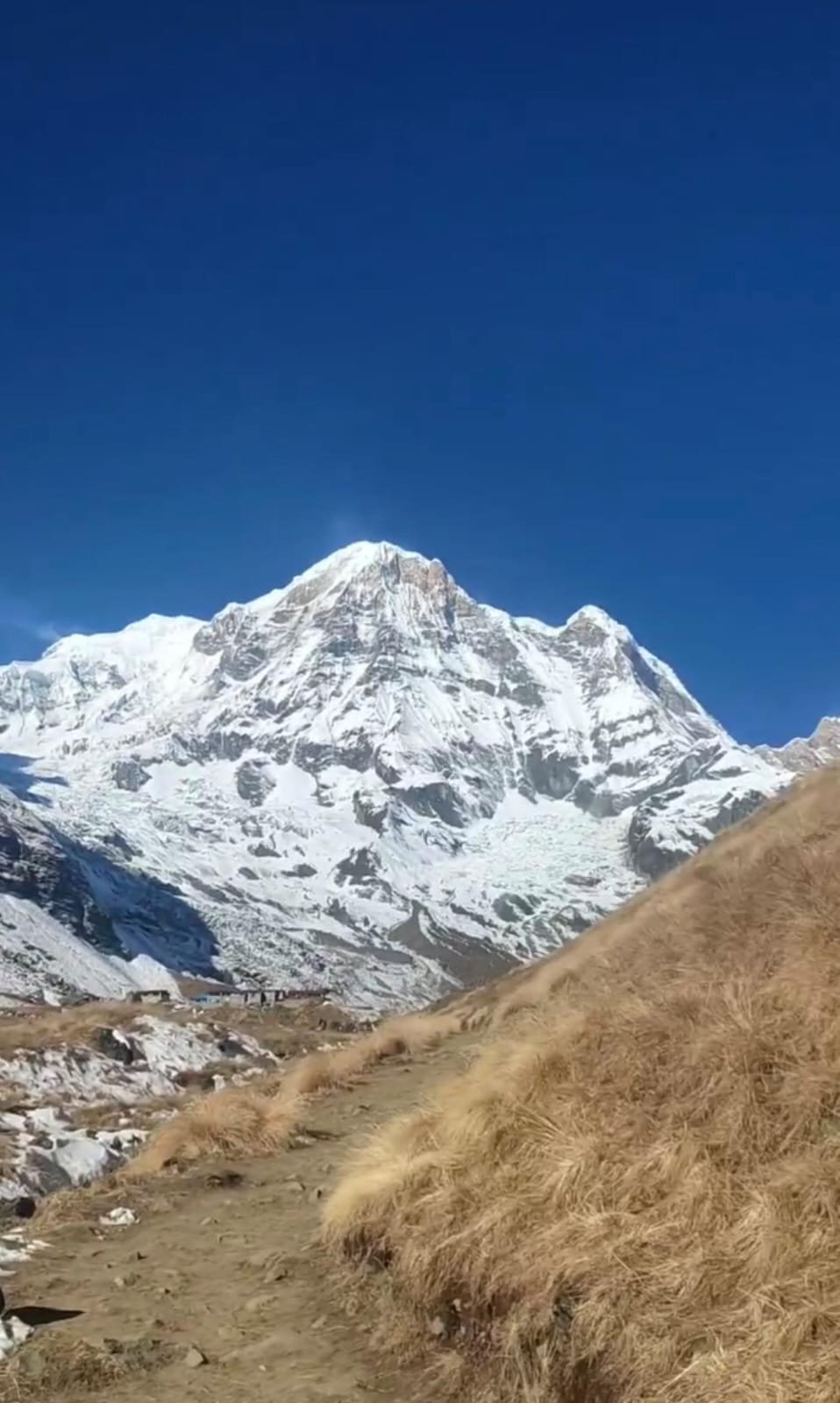
Annapurna Base Camp is not a summit viewpoint; it is the floor of an amphitheatre. You walk up the Modi Khola gorge for four days between walls that close in, and then the valley opens suddenly into a bowl ringed by Annapurna South, Hiunchuli, Baraha Shikhar and Machhapuchhre. Trekkers arrive in the afternoon and stand in the middle of it. Sunrise the next morning is why people come back.
The stairs above Chhomrong
The hardest part of ABC is not the altitude, it is the staircases. Chhomrong sits on a ridge at 2,170 m and the trail drops 300 m to the river before climbing again, twice a day, on stone steps cut into the hillside. Locals call the section above Chhomrong the 3,000 steps. Trekking poles help more here than on any pass.
Altitude at Base Camp
Base Camp is 4,130 m, which is high enough to feel. Most itineraries sleep there one night only, arriving in the afternoon and descending the next morning. Headaches and broken sleep are normal; vomiting, confusion or breathlessness at rest are not, and mean descending immediately. The ascent is gradual enough that serious cases are rare on the standard seven-day route.
Teahouses, food and water
Teahouses run the whole way and a twin room costs NPR 300–500, rising above Deurali. Dal bhat is the reliable meal; the menu thins out as you climb. Drinking water can be bought boiled, or you can refill and treat. Above Bamboo, hot showers and charging cost extra because fuel has to be carried up the gorge.
ABC or North Base Camp
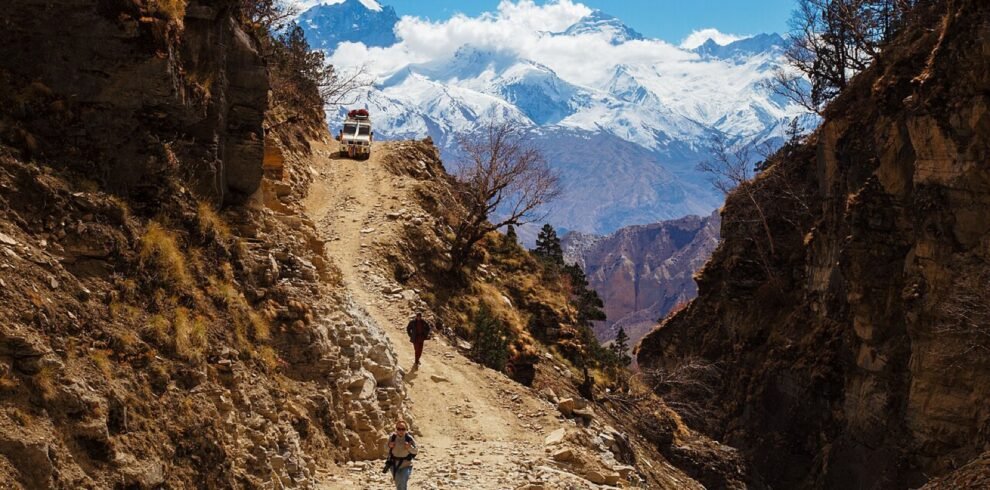
Annapurna Base Camp is the sanctuary south of the massif, reached from Pokhara in seven days on a busy, well-serviced trail. North Base Camp is on the far side in the Manang valley, reached by a rough road and a harder walk, with far fewer trekkers and no teahouse network to speak of. Choose ABC for a first Himalayan trek; choose the north side for solitude and a willingness to organise logistics.
Day by day
| Day | Stage | Altitude / time |
|---|---|---|
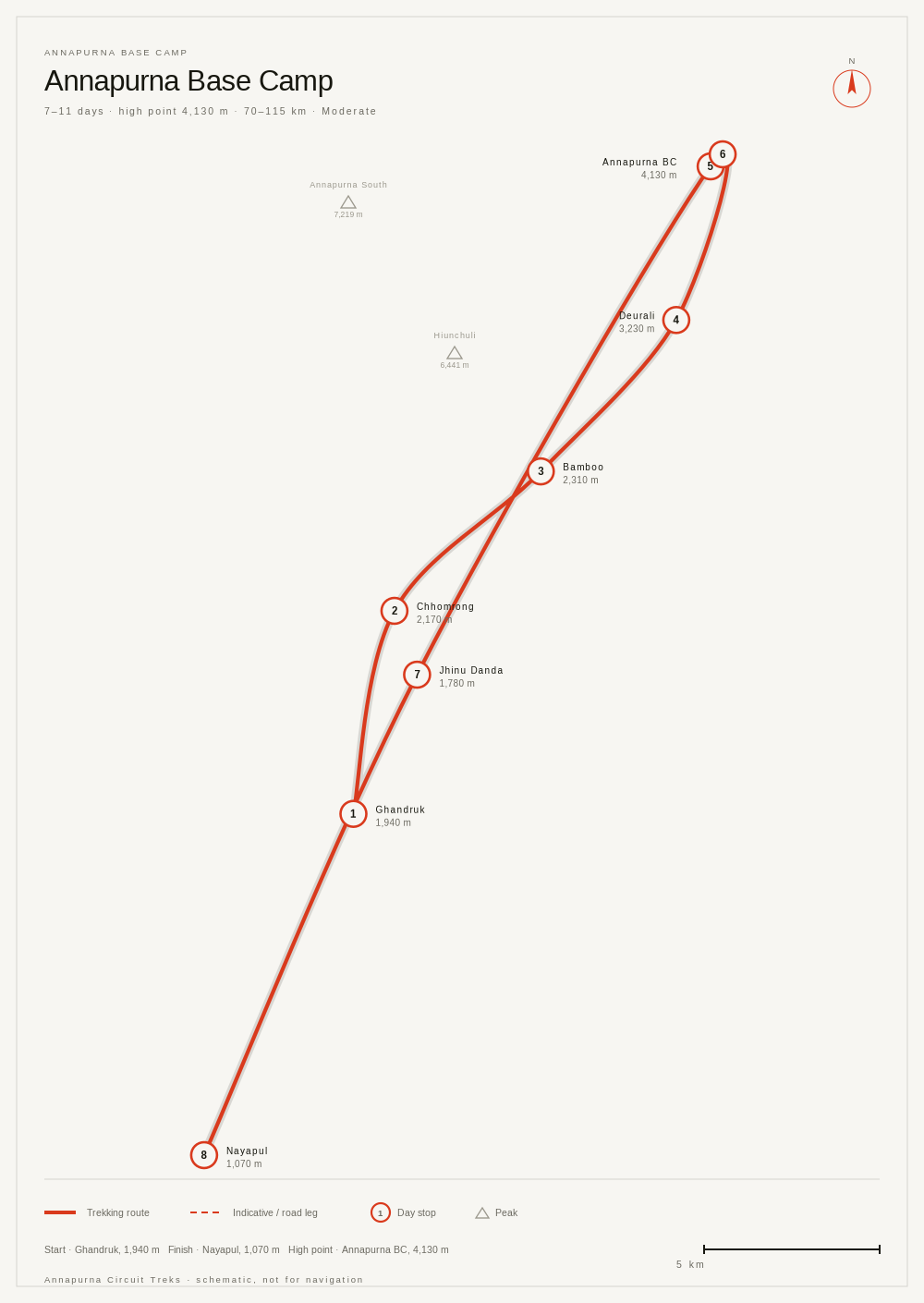
| 1 | Pokhara → Nayapul → Ghandruk | 1,940 m · 5 h |
| 2 | Ghandruk → Chhomrong | 2,170 m · 5 h |
| 3 | Chhomrong → Bamboo | 2,310 m · 5 h |
| 4 | Bamboo → Deurali | 3,230 m · 5 h |
| 5 | Deurali → Machhapuchhre BC → ABC | 4,130 m · 6 h |
| 6 | ABC at sunrise, descend to Bamboo | 2,310 m · 7 h |
| 7 | Bamboo → Jhinu Danda | 1,780 m · 4 h |
| 8 | Jhinu → Nayapul → Pokhara | 1,070 m · 4 h |
Altitude profile
| Place | Altitude | When |
|---|---|---|
| Nayapul | 1,070 m | Day 1 |
| Ghandruk | 1,940 m | Day 1–2 |
| Chhomrong | 2,170 m | Day 2–3 |
| Bamboo | 2,310 m | Day 3 |
| Deurali | 3,230 m | Day 4 |
| Machhapuchhre Base Camp | 3,700 m | Day 5 |
| Annapurna Base Camp | 4,130 m | Day 5–6, the high point |
| Jhinu Danda | 1,780 m | Day 7, hot springs |
What it costs
| Option | Price | What that covers |
|---|---|---|
| Guided, teahouse, 7 days | USD 700–900 | Guide, porter, permits, lodges, meals |
| Guided, 10–11 days with Poon Hill | USD 900–1,200 | Adds Ghorepani and the sunrise |
| Independent | USD 25–40 / day | Permits, lodges, meals, jeep to Nayapul |
| Pokhara–Nayapul transfer | USD 25–40 | Private jeep, 90 minutes |
Included
- Licensed guide and porter (one per two trekkers)
- ACAP entry permit and TIMS card
- Six nights in teahouses, twin share
- Three meals a day on the trail
- Pokhara–Nayapul–Pokhara transfers
- Guide's insurance, wages and equipment
Not included
- International flights and Nepal visa
- Travel and evacuation insurance (required)
- Hot showers, charging, drinks and snacks
- Tips
- Extra nights in Pokhara
Permits
| Permit | Cost | Notes |
|---|---|---|
| ACAP entry permit | NPR 3,000 | Annapurna Conservation Area |
| TIMS card | NPR 2,000 | Checked at Birethanti and Chhomrong |
What to pack
- Three-season sleeping bag (teahouses are unheated above Deurali)
- Down jacket and a warm mid-layer — Base Camp is below freezing at dawn
- Waterproof shell; the Modi Khola valley funnels rain
- Trekking poles for the 3,000 steps above Chhomrong
- Purification tablets — buy boiled water where it is offered
- Head torch and cash; there is no ATM beyond Nayapul
Questions
- How many days does the Annapurna Base Camp Trek take?
- Seven days from Nayapul at a steady pace, ten to eleven with Poon Hill and Ghandruk included. The sanctuary is reached on day five or six.
- How hard is the Annapurna Base Camp Trek?
- Moderate. There is no pass and no glacier travel, but there are long stone staircases — roughly 3,000 steps above Chhomrong — and you sleep at 4,130 m on the last night.
- Can a beginner do Annapurna Base Camp?
- Yes. It is the most achievable 4,000 m trek in Nepal: seven days, teahouses the whole way, and no technical terrain. Fitness matters more than experience.
- What is the difference between ABC and North Base Camp?
- ABC is the sanctuary south of the massif, reached from Pokhara through Chhomrong. North Base Camp is on the far side, in the Manang valley, and is a harder, less-travelled route with different access.
- When is the best time for Annapurna Base Camp?
- March–May and September–December. October and November give the clearest mountain views; spring brings rhododendron below 3,000 m.
- How much does the Annapurna Base Camp Trek cost?
- Guided, USD 700–1,200 depending on length and inclusions. Independent, USD 25–40 a day plus permits.
-
Tea House
-
Autumn (September – November) / Spring (March – May)
-
Bus,Jeep
-
Experiance & Licensed
-
4130M
The Annapurna Base Camp Trek is a 7–11 day walk from Nayapul to the 4,130 m sanctuary below Annapurna South, reaching Base Camp on day five or six. Guided trips cost about USD 700–1,200, and the season runs March–May and September–December.
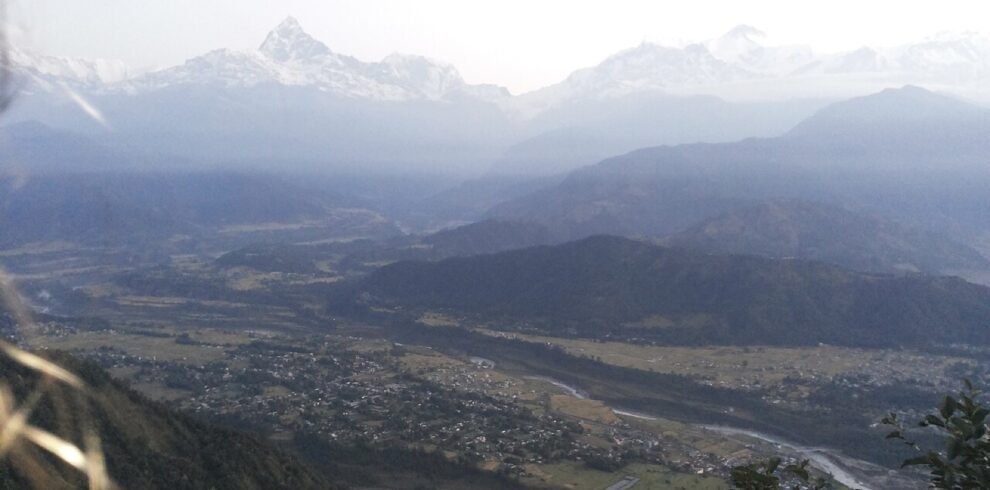
The Annapurna Base Camp Trek is a journey that unfolds gradually, revealing the Himalayas in layers rather than all at once. From the first steps beyond Pokhara, the trail threads through cultivated hillsides where terraced fields cling to steep slopes and rivers carve deep valleys. Small settlements appear at natural resting points, their stone houses and prayer flags reflecting a rhythm of life shaped by altitude, seasons, and the mountains themselves.
As the path rises, the air cools and the landscape changes. Subtropical forest gives way to stands of oak, bamboo, and towering rhododendron, their roots gripping the earth along narrow trails and shaded stairways. Suspension bridges span rushing rivers below, and each crossing feels like a quiet transition from one world to another. Villages such as Chhomrong offer wide balconies of land where Annapurna South and Machhapuchhre begin to dominate the horizon, their snowfields catching light in constantly shifting patterns.
Beyond Chhomrong, permanent settlements thin out and the valley narrows. The route follows the Modi Khola upstream, enclosed by steep rock faces and cascading waterfalls that pour down from unseen heights. Days are measured not by distance but by terrain, altitude, and the steady rhythm of walking. Teahouses appear just when rest is most welcome, offering warmth, simple meals, and shared stories with fellow trekkers from around the world.
Approaching the upper reaches of the trail, forest slowly recedes and alpine terrain takes over. The landscape becomes more open, raw, and dramatic. Places like Deurali and Machhapuchhre Base Camp sit beneath towering walls of ice and rock, where avalanches can sometimes be heard echoing across the valley. The sense of scale is humbling; the mountains are no longer distant scenery but constant companions on every side.
The final approach to Annapurna Base Camp feels almost ceremonial. The trail enters the Annapurna Sanctuary, a vast natural amphitheater enclosed by some of the highest peaks on earth. Annapurna I, Annapurna South, Hiunchuli, Gangapurna, and Machhapuchhre rise in a continuous arc, their faces shifting in color from dawn to dusk. Standing at base camp, surrounded by this ring of summits, creates a powerful feeling of stillness and presence that words struggle to capture.
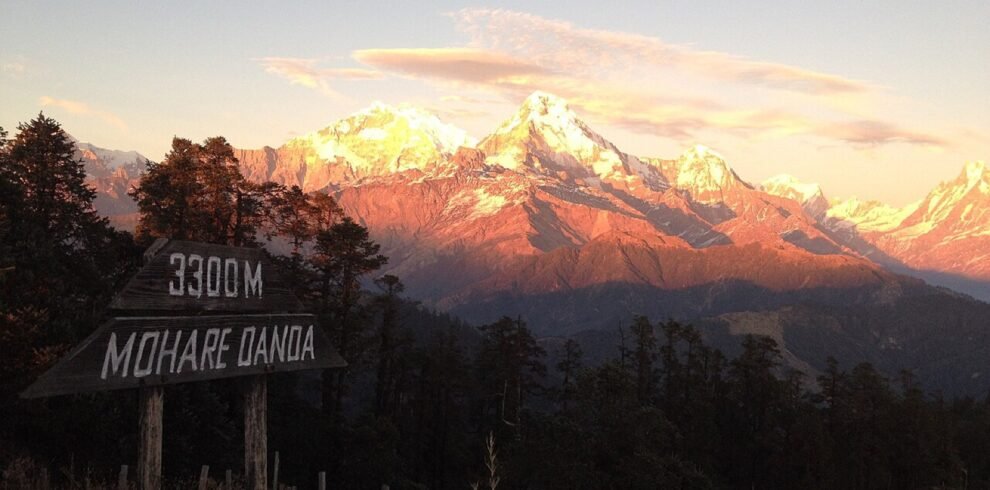
Mornings at Annapurna Base Camp are especially memorable. As the first light touches the peaks, shadows retreat and the entire sanctuary glows in shades of gold and silver. It is a quiet, almost reverent moment, shared by those who have walked patiently to reach this place. The return journey follows the same trail, yet feels entirely different. Descending allows time to notice details missed on the way up—textures of rock, patterns of forest, and the subtle sounds of the valley.
The Annapurna Base Camp Trek is not only about reaching a destination. It is about the slow immersion into a mountain environment, the connection with landscapes shaped by time and weather, and the simple routine of walking, resting, and moving again. It offers challenge without harsh extremes, depth without excess, and a rare chance to stand at the heart of one of the world’s great mountain regions.
Highlights
- Walk through terraced hillsides and traditional mountain villages shaped by generations of Himalayan life.
- Pass through changing landscapes, from warm river valleys to cool forests of bamboo, oak, and rhododendron.
- Cross high suspension bridges over fast-flowing rivers deep in the Modi Khola valley.
- Experience close-up views of Annapurna South and the iconic Machhapuchhre as they slowly reveal themselves along the trail.
- Stay in welcoming teahouses that offer warmth, local meals, and shared mountain stories each evening.
- Enter the dramatic Annapurna Sanctuary, a natural bowl surrounded by towering ice and rock walls.
- Witness unforgettable sunrise light sweeping across Annapurna I, Hiunchuli, and Gangapurna.
- Trek through quieter upper valleys where forest fades into raw alpine terrain and vast open space.
- Enjoy a balanced Himalayan journey that blends physical effort, cultural insight, and striking mountain scenery.